Posted in Discipline in kids, Financial freedom, money management, Parenting, teaching teens, Uncategorized

School’s Out: How to Teach Your Kids from Home

Juggling education and employment can be really difficult. Let alone someone else’s education, and your own employment. In the past few weeks, many parents have found themselves having to teach their children from home. All while holding down a full-time job remotely. 

So for those of you who are suddenly faced with the role of full-time worker and part-time educator, I hope this week’s post will provide a helping hand. 

My aim is to use the skills to help carers figure out how best to teach their children, and my own experience in teaching to figure out what to teach them.

How to teach  

1. Intentions

My first step is to find the “why” behind the lesson. To ask myself: what is it that I hope to achieve? 

Specific aims tend to work best. Non-specific ones, such as “improve Maths skills” or “get better at English” are too vague. They’re difficult to measure, so can leave both parties feeling frustrated. 

Instead, I prefer to set really precise goals, which can be achieved in an hour or less. Something like: understanding a specific extract of literature, or getting to grips with a single math problem. 

I have found that, when teaching, building confidence is just as important as building knowledge. It’s better to go slow and achieve mastery, than race through and leave the student feeling lost or inadequate. 

2. Learning Styles 

In my experience, kids learn best from a place of curiosity, rather than a sense of obligation. But curiosity is deeply personal — what makes me curious might make you want to take a nap. 

This is where Learning Styles come in. In NLP, it is thought that people fall into three categories when it comes to processing the world: 

  • Visual — a preference for pictures and images; 
  • Auditory — a preference for sounds; 
  • Kinaesthetic — preference for touch, sensation or emotion. 

You can be more than one of these at the same time. In fact, I would argue that most people contain all three, in varying proportions. Also, a different preference can be dominant in different situations or moods. 

For example, I’m mostly Visual — I learn best when watching something rather than reading about it. If I was faced with the exact same information — one as a YouTube tutorial and another as a transcript — I would absorb much more from the tutorial. 

However, when I’m upset, I become highly Kinaesthetic — I like to feel comfy, and often find myself mindlessly stroking what I’m wearing, like a scarf or a jumper. 

Figuring out a student’s Learning Style is really key, in my experience, to teaching. There are two ingredients to teaching — information and delivery. Learning Style is a matter of delivery. By teaching in a child’s preferred Learning Style, you leave more of their energy free to focus on the information itself.  

Once you understand your child’s Learning Style, you can start to tailor the lessons accordingly. For example: 

  • A child with a Visual preference might benefit from illustrations, drawings, a whiteboard; 
  • Someone with Auditory preferences might enjoy conversation as a way of learning; 
  • If your kid has a Kinaesthetic preference, they might learn best through stories and anecdotes. 

By understanding Learning Styles, you can not only get your message across, but also understand how it will be received. 

3. The Four Stages of Learning

NLP teaches that, in any skill, people progress across four stages of competence: 

  • Unconscious Incompetence (i.e. you don’t know something, and you don’t know that this is the case)
  • Conscious Incompetence (i.e. you don’t know something, and you know that this is the case)
  • Conscious Competence (i.e. you know how to do something, but only if you actively think about it)
  • Unconscious Competence (i.e. you know how to do something, without even having to think about it)

Very young children bypass the Conscious phase of the Learning Cycle (they move directly from Unconscious Incompetence to Unconscious Competence). They do this by copying what they see, without needing to understand why they are doing it.

But as children grow older, and start learning more complex ideas, they start to experience the discomfort of Conscious Incompetence. This can lead to feelings of self-blame and shame, for not understanding things “well” or “quickly” enough. Over time, learning can become associated with negative emotions, and therefore be met with hostility. 

Everyone has thresholds in energy, which vary for different things. When I was learning how to drive, I found myself getting really tired after an hour-long lesson. My partner, who has been driving for over a decade now, was designated driver during our time travelling, and frequently drove for 6 or more hours per day. His only complaint was how much Taylor Swift I subjected him to. 

Children operate in the same way. They have thresholds for learning. Existing in the realm of Conscious Incompetence or Conscious Competence can take a lot of energy.  

By understanding the Learning Cycle, you can recognise zoning out or a lack of interest for what it is — your child is starting to reach their learning threshold. 

For subjects they are Unconsciously Competent in (for me this was English), children can learn for longer. For subjects in which they have Conscious Competence, the threshold may be as little as ten minutes. 

Either way, recognising this, without judgement, creates a positive learning experience. It will also make it much easier to return to the subject later. When faced with a child’s learning threshold, I have found that the best thing to do is to move on, and return to the subject later.

The “What” of Learning

Achievement 

“You often feel tired, not because you’ve done too much, but because you’ve done too little of what sparks a light in you.”

— Alexander Den Heijer, Nothing You Don’t Already Know

Personally, I have found that my happiness levels are higher on the days where I feel like I’ve “accomplished” something. But it can be hard to get a sense of achievement during the lockdown. 

For me, discovering the VIA Character Test has been instrumental in this (they also do a Young Person’s version). The VIA Test helps you discover your key strengths. When I do something towards one of them every day, I get a sense of accomplishment. 

Here’s a full list of ideas. And this is what I’ve been doing: 

  • One of my strengths is “Curiosity”, meaning that I love discovering new things and engaging with the world around me. This can be tricky right now, but there are ways around it. For example, I’ve been getting in touch with someone new on most days, to catch up and check in. I’ve also been trying a new exercise every day (YouTube is great for this). 
  • One of my other strengths is “Love of Learning”. This means that — you’ve guessed it. Learning new things is fun for me. This sounds like it could only be a good thing. But it can be negative too, in that, without sufficient mental stimulus, I get easily bored. So, every day during the lockdown, I’ve been trying to learn something new – by spending an hour or so reading about something that interests me, but I don’t know much about. 

You can apply this approach to both yourself and your kids. By understanding their strengths, and doing something to “feed” these every day, you can help them to achieve a sense of accomplishment, even during the lockdown. 

The Old and New 

Having no syllabus can be a great opportunity to experiment. Even when I was teaching curriculum subjects, I found that people responded best to a mixture of stimuli. So — a combination of something established, like English or Maths, plus something brand new — like Philosophy or Psychology —  in every lesson, achieved the best results. 

For example, if we were talking about Modernist Literature, we’d also learn about what was happening in the world of psychology at that time (hint: a lot) and how the two things were influencing each other. 

Mixing old and new within a topic is also a good way to provide a lesson that’s both stimulating and confidence-boosting. Re-hashing old ground helps a child feel confident that they are good at something, because they already “know” it. But keeping it fresh stops them from getting bored. 

So those are the two options that I would use: 

  1. If you’re working with a syllabus and/or exams haven’t been cancelled, mixing old information (the subject) with new (the context) can be great. 
  2. If you’re working outside a syllabus, then this is the perfect opportunity to mix curriculum subjects (Maths, Science) in maths particularly you can focus on using it to teach money management for children with other kinds of skills (Meditation, Positive Psychology). 

Which leads us to…

Helpful Links 

If you are feeling like you need a break, or would just like to keep your children occupied, here are some additional tools which might help: 

  • The app-based tuition agency, Sophia, have started offering all their services online.
  • Holly King-Mand has been offering free English lessons every day since the lockdown began
  • Udemy offers reasonably-priced online courses, including kids courses in Art, Yoga and Writing
  • Headspace does short meditations for kids

Conclusion 

The last comment I would make, from an perspective, is that learning is state dependent. In other words, the mental and emotional state of your children will influence how effectively they learn. 

So, without the pressure of outcomes, like exams and grades, this can become a really wonderful opportunity to re-frame their attitude towards learning. To create positive associations, and to encourage them to learn by following and exploring their own natural curiosity, rather than out of a sense of obligation. 

Posted in Discipline in kids, Financial freedom, Kids, money management, Parenting, teaching teens

Real-Life Lessons To Teach Your Kid At Home During The Pandemic

Homeschooling during the pandemic has many of us struggling. While our teachers continue to go above and beyond providing resources and assignments, the message for us as parents is to just do what you can.

While some of us thrive on colour-coded schedules, others of us are finding the struggle all too real, in between work demands, our kids’ attitudes to homeschooling, and, oh yeah, our lack of a teaching degree. Don’t worry. This is not forever and your kids will catch up academically, if kitchen-table classes have been a fail.

We’ve compiled a list of real-life lessons your kids will actually enjoy:

1. Bake a cake

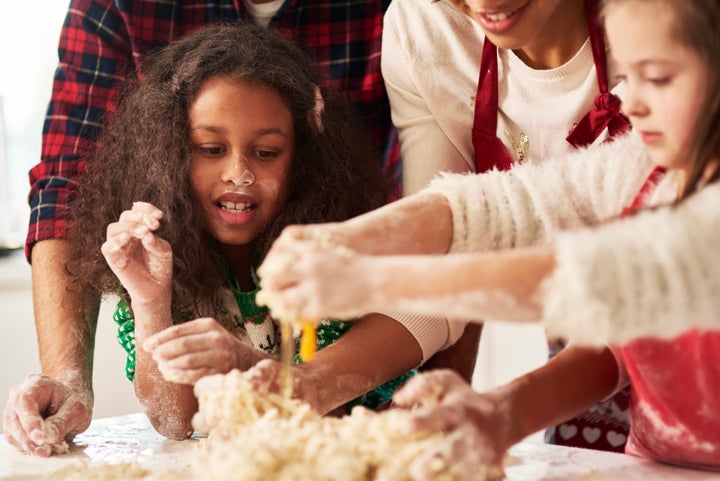
What happens to a solid fat (butter or coconut oil) when it’s heated? How do raising agents work? What happens to the batter after it spends time in the oven? As you make a cake with your kids, talk about the science behind the magic. You should also get them to do all the measuring and weighing of ingredients, so they’re working with fractions, weights and conversions. You could even have them prepare a grocery list for the ingredients, sticking to a budget.

Have them read the recipe and follow the step-by-step instructions. Then talk about the nutritional value of the ingredients you use: How apple sauce, bananas or carrots are better for you as sweeteners than just sugar; or how you can bump up the protein by with nuts or nut flours. Last part: Pure joy, as you savour the freshly baked end results.

Life skills: Being able to make food from scratch and budgeting

Academic skills: Home economics, chemistry, math, literacy, nutrition

Close up of family in the kitchen

2. Grow something edible

Nurture your kid’s green thumb by having them plant something in soil or sprout something on damp cotton. You can try fast-growing cress or mustard seeds, or seeds scooped from a fresh tomato, or even an old potato that’s started growing new roots in the bag. Cleaned-out yoghurt tubs or even empty toilet paper rolls make cheap and convenient pots for easy-to-grow seedlings like kale, mesclun mix and endive. Older kids can collect data every couple of days, about the growth and condition of the plants, then you can chat about important variables, like sunlight, shade and watering.

Life skills: Surviving the apocalypse (JK!) and gardening

Academic skills: Botany, environmental science, social studies

3. Learn to relax

So soccer fields, monkey bars and basketball courts are closed for business right now. But your kid can still do something with their excess energy and big emotions at home through yoga. All you need is a little floorspace to lay out a mat or folded blanket. To do a more formal kids’ yoga class, you’ll need internet access too, but really, the most important thing about yoga is learning how to breathe.

You can keep the at-home practice simple, having your kid lie down on the floor with their eyes closed, while you talk them through stretches or tightening and relaxing their muscles, from head to toe. Encourage them to take slower and deeper breaths, with their hand on their belly, so they can feel their abdomen rise and fall. Older kids might enjoy learning about the origins and history of yoga too. Here’s a great resource that explains the basics.

Life skills: Emotional regulation, coordination, self-discipline

Academic skills: Phys. ed., health sciences, world religions, geography

“Audiobooks give us the opportunity to listen to a story together, and they take the monotony out of tasks such as folding laundry.”

4. Drop off donations at a shelter or food bank ― or help a neighbour

With so many people in our communities experiencing income loss and food and housing insecurity right now, a hands-on lesson in human kindness is probably the most valuable thing we can give our kids. Chat with your children about how the pandemic is affecting more vulnerable people, in age-appropriate ways, then do some research together, either online or by picking up the phone, to see how you can help.

You could have your kids earn money doing extra chores to buy things to give to the charity of their choice, financial education for kids plays a very important role in building up their confidence, . Or you could get involved with a grassroots neighbourhood group that supports frontline health workers, by walking their dogs and dropping off prepared meals. Maybe your kids can check in on a senior on your street who lives alone by videochat, and then chat or play a game together, to break their isolation. There are so many ways to help!

Life skills: Serving others, budgeting and community-mindedness

Academic skills: Research and math (high-school kids could get their volunteer hours too)

Get them started young.

5. Fold laundry together while listening to a podcast or audiobook

With all of the additional demands and ongoing stress of the pandemic, sometimes we are beyond exhausted, and reading to our kids or persuading them to read a book might just feel like one thing too much. Audiobooks give us the opportunity to listen to a story together and they take the monotony out of tasks such as folding laundry, turning them into moments for bonding.

Sites like Audible currently offer a selection of kids books that can be streamed for free, as do many public libraries. It’s fun to chat afterwards about what you listened to together. Consider things like how the details of the story were revealed, what the surprises were and what you both thought of the main characters.

Posted in Discipline in kids, Financial freedom, Kids, money management, Parenting, teaching teens

How Much Allowance to Give Your Kids

Giving your kids an allowance is a smart idea. It’s never too soon to learn about financial education for kids. An allowance can also teach other important concepts, including:

  • Delayed gratification—saving for things they really want
  • Charity and helping others
  • Budgeting

But many parents have questions about how much to give, what to do about chores, and other allowance policies. Here is what experts recommend.

Determine How Much Allowance to Give

Calculating the right allowance amount really means thinking about what you expect your children to buy with their funds. If it’s simply extra spending money, then the allowance does not need to be very much, particularly for a younger child. But if you expect your child to pay for many of their own day-to-day expenses, then it should be higher.

When you’re making the decision, consider:

  • What your child is now spending on the things you will expect the allowance to cover (say, school lunches, clothing, and birthday gifts for friends).4
  • What your child’s peers are getting, if you know.
  • A base rate of one dollar per year of age every week or every other week. The idea is to have a formula that will slowly increase as your child gets older.
  • An amount that can be split into thirds: One-third for saving, one-third for spending, and one-third for charitable contributions.

Create Sensible Allowance Policies

As with any other family rule, set expectations about allowance from the beginning, and then stick to them. Give your children their allowance each and every week, whether or not they remember to ask for it. This helps them learn how to budget.

If they run out of funds before the next payday, don’t bail them out. Part of the point of an allowance is to learn how to prioritize and budget.4 Giving advances doesn’t help kids learn how to use their money carefully.

Encourage or require your child to set aside a certain amount each week for short-term and long-term savings and for charity.

Avoid Allowance Mistakes

Keep allowances working for you and your family by steering clear of these common mistakes.

  • Tying allowance to doing chores. If the allowance is associated with specific chores, kids can stop doing the chores and say they don’t want the money anymore. Keep regular chores separate from allowance (keep giving the allowance even if your child fails to do chores).
  • Instead, allow your child to earn money beyond allowance by doing extra chores—as long as regular chores are complete. Regular chores are just part of being a contributing member of the household.
  • Withholding your child’s allowance as a punishment. Take away privileges instead.
  • Doling out extra money. Don’t give your child money for extras in addition to giving an allowance. This means the allowance isn’t helping to teach financial responsibility.
  • Starting too late. Between five and seven years old, most kids are ready to start learning about money and understanding the concepts allowances teach.
Posted in Discipline in kids, Financial freedom, Kids, money management, Parenting, teaching teens

How Parents Can Raise a Good Child

Many parents focus attention on their children’s grades and extracurricular activities, such as by making sure kids study, do their homework, and get to soccer practice or dance lessons prepared and on time. But all too often, we forget to put time and effort into nurturing another component of child success and development—one that is just as important, and perhaps even more essential, than good grades, awards, and trophies—being a good person.

It can be easy to forget the importance of countering the pervasive messages of instant gratification, consumerism, and selfishness prevalent in our society. If we want to raise children who are pleasant company and genuinely nice people, we can help guide our kids toward habits and behaviors that promote positive character traits like kindness, generosity, and empathy for those who are less advantaged or who need help.

Raising Your Children to Become Good People

As C.S. Lewis famously said, “Integrity is doing the right thing, even when no one is watching.” How can we raise a good child, one who will do the right thing, even when no one may see them do it, and when there may be no reward? While there is no guaranteed formula (if only!), here are some ways parents can build good character and help their child grow into a good person.

Nurture Empathy in Your Child

Emotional intelligence and empathy, or the ability to put oneself in someone else’s shoes and consider their feelings and thoughts, is one of the most fundamental traits in good people. Studies have shown that having a high emotional quotient—that is, being able to understand one’s own feelings, the feelings of others, having self-control, and being able to control one’s own emotions—is an important component of success in life.

To encourage empathy in your child, encourage your child to talk about her feelings and make sure she knows that you care about them. When a conflict occurs with a friend, ask her to imagine how her friend might be feeling and show her ways of managing her emotions and work positively toward a resolution.

Encourage Them to Lift Up Others

While stories about kids engaging in bullying and other bad behavior often make headlines, the truth is that many kids quietly perform good deeds in the ordinary course of their lives, whether it’s making a friend feel better when he’s down or pitching in at a community center. As you encourage positive behaviors such as doing something to make someone’s day better (even something as small as patting a friend on the shoulder when they’re sad), be sure to talk about what negative effects behaviors like gossiping or bullying have on both sides (both those who are bullied and those who do the bullying), and why and how it hurts people.

Teach Them to Volunteer

Whether your child helps an elderly neighbor by shoveling the sidewalk or helps you pack some canned goods into boxes for donation to family shelters, the act of volunteering can shape your child’s character, also teaching kids about money will help them to learn and think about the needs of those less fortunate than they are, and can feel proud of themselves for making a difference in others’ lives.

Don’t Reward Them for Every Good Behavior or Act of Kindness

An important thing to remember when encouraging kids to help others is to not reward them for every single good deed. That way, your child won’t associate volunteering with getting things for himself and will learn that feeling good about helping others will be in itself a reward. That’s not to say you shouldn’t occasionally take your child out for a special treat or give him a gift for helping others AND for working hard and studying hard; kids love encouragement and thrive on parents’ approval. An occasional reward is a great way to show him how thankful you are for the good things he does.

Teach Them Good Manners

Does your child routinely practice the fundamentals of good manners such as saying “Thank you” and “Please”? Does she speak in a polite manner to people and address elders as “Mr.” and Ms.”? Does she know how to greet people properly, and is she familiar with the basics of good table manners? Is she a gracious loser when she plays a game with friends? Remember that you are raising a person who will go out into the world and interact with others for the rest of her life. (And this little person, as she grows, will be at the dinner table with you and interacting with you every day until she leaves the nest.) You can play an important role in shaping how well-mannered your child will be.

Treat Them With Kindness and Respect

The most effective way to get kids to speak to you and to others in a respectful way and to interact with others in a nice manner is by doing exactly that yourself when you interact with your child. Think about how you speak to your child. Do you speak harshly when you’re not happy about something? Do you ever yell or say things that are not nice? Consider your own way of speaking, acting, and even thinking, and try to choose a friendly and polite tone and manner with your child, even when you are talking to him about a mistake or misbehavior.

Don’t Be Shy About Disciplining Your Child

Parents who hold back on giving children boundaries or firmly (but lovingly) correcting bad behavior may actually be harming their child with good intentions. Children who are not disciplined are unpleasant, selfish, and surprisingly unhappy.

Some of the many reasons why we need to discipline include the fact that children who are given clear rules, boundaries, and expectations are responsible, more self-sufficient, are more likely to make good choices and are more likely to make friends and be happy. As soon as you see behavior problems such as lying or backtalk, handle them with love, understanding, and firmness.

Teach Her How to Be Thankful

Teaching your child how to be grateful and how to express that gratitude is a key component of raising a good child. Whether it’s for a meal you’ve prepared for dinner or for a birthday gift from Grandma and Grandpa, teach your child to say thank you. For things like gifts for birthdays and holidays, be sure your child gets into the habit of writing thank you cards.

Give Them Responsibilities Around the House

When children have an expected list of age-appropriate chores to do at home, such as helping set the table or sweeping the floor, they gain a sense of responsibility and accomplishment. Doing a good job and feeling like they are contributing to the good of the household can make kids feel proud of themselves, and help them become happier.

Model Good Behavior

Consider how you interact with others, even when your child isn’t watching. Do you say “Thank you” to the checkout clerk at the market? Do you steer clear of gossip about neighbors or co-workers? Do you use a friendly tone when addressing waiters? It goes without saying that you directly influence how your children will be. If you want to raise a good child, conduct yourself in the way you want your child to act.

Posted in Discipline in kids, Financial freedom, Kids, Parenting, teaching teens

Should You Charge Your Teen Rent?

Many parents wonder whether it’s ever appropriate to charge a teenager rent. While you shouldn’t charge rent while your teen is attending high school, there may be times when becoming a landlord is appropriate. In fact, charging your teen rent might be the kindest thing you could do in some circumstances.

When to Charge Rent

As long as your teen is attending school full-time (whether it’s high school or college), don’t charge rent. But, don’t let him continue the free ride if he’s not furthering his education.

Here are a few examples of when you should expect your teen to contribute to his room and board:

  • Your 16-year-old drops out of high school and says he wants to get a job.
  • Your 17-year-old quits school and says he’d prefer to just get his GED.
  • Your 18-year-old wants to live at home after he graduates from high school. He plans to find a job, rather than go to college.
  • Your 19-year-old drops out of college after one semester.

Dangers of Not Charging Rent

There’s nothing wrong with allowing your teen or young adult to live at home for a few extra years while she earns money or gains the skills she needs to live on her own. But allowing her to live rent-free could be harmful to her—as well as your relationship. Here are a few dangers of not charging rent:

  • Your child will miss out on learning skills. Independent living teaches valuable life skills, ranging from financial education for kids to budgeting and self-discipline.The longer your teen delays paying rent, the longer it will take for her to gain those skills.
  • Your child’s emotional growth could be stunted. Independent living requires young people to face their fears, step outside their comfort zones, and deal with stress on their own. Charging rent could be instrumental in helping your child build mental strength.
  • Not charging rent could be taxing on your income. Helping your child out financially could be harmful to your nest egg. Many parents delay retirement or give up things so they can continue supporting their children beyond the age of 18.
  • You may fuel your child’s fantasy about independent living. If your teen doesn’t pay rent, he’ll be free to spend his money however he wants. He may buy expensive things that won’t be able to afford once he has to pay rent.
  • Your teen may grow more dependent on you. Your teen should be gaining independence over time. But as long as he’s living in your home rent-free, he may grow increasingly dependent on you to take care of him. He may doubt his ability to live on his own.

How Much to Charge

Research local rental advertisements to get a good idea about what your teen might pay for a one bedroom apartment. Charge a little bit less for his room and board in your home.

Decide what other expenses you’re going to make your teen responsible for paying. Car insurance, gas money, and entertainment are a few of the bills he could start to cover on his own.

Make sure he knows that he’ll have added expenses when he moves out. Utilities, cable, and groceries, for example, may be more expensive than he anticipates.

What to Do With the Money 

Some parents feel uncomfortable collecting rent from their children. They feel guilty about spending it or putting it in their own bank account.

If you don’t want to use the money for yourself, you could set the rent aside in a special account. Then, invest it into a retirement account for your teen or use it to help pay for your teen’s education if he decides to take classes at a later date.

But, you are certainly free to use the money however you want. Use it to cover your expenses, go on vacation, or save it up for retirement if you wish. 

Teach Money Lessons Early

It’s important to start teaching your teen valuable lessons about money as soon as possible. Assigning chores and giving an allowance at a young age will teach your child basic money skills.

As he grows older, make your child responsible to pay for some of his own clothing or his entertainment. Teach him about budgeting and assist him in setting aside money for savings. No matter how old your teen is, it’s never too late to start teaching him to be financially savvy.

When your teen pays rent, he’ll learn how to start being more responsible with his money. If he’s late on the rent, or he’s struggling to manage his money, turn his mistakes into learning opportunities.

With practice—and more guidance—he will be able to be successful at paying his own way when he’s on his own. Your goal should be to ensure that he’s able to be independent once he moves out of the house.

Establish Healthy Guidelines

If you’re going to charge your teen rent, establish some guidelines that will help you live together more comfortably. It’s important to ensure that your rent collection serves as a worthwhile practice for both you and your teen.

Create rules that will ensure your teen learns from the opportunity you’re giving him. Here are a few examples of expectations you might set:

  • We’ll review your budget together. Tell your teen he needs to sit down with you once a week to assess his budget. Help him figure out how much he needs to set aside to cover his bills.
  • Late rent will lead to interest charges. Allowing your teen to be late on the rent every month won’t do him any favors. Hold him accountable by charging interest—even if it’s only a few dollars. His next landlord likely won’t be as kind so it’s important to teach him to pay on time.
  • In six months I’ll help you find an apartment. Make sure you have an end goal in mind. If your teen thinks he can live with you forever, he might not save up any money to money to move out.

Most importantly, keep the lines of communication open with your teen. Talk about rent-related issues as they arise to prevent them from damaging your relationship.

Remember, that you are still in charge. So even when your teen pays rent, he doesn’t have the right to break your rules, behave disrespectfully, or do whatever he pleases. You still own your home or pay for your apartment, so you get to set the rules.

When used appropriately, collecting rent from your teen could enhance your relationship and may better prepare your teen for the future.

Posted in Discipline in kids, Financial freedom, Kids, Parenting, teaching teens

How to Define and Explain the Economy to Kids

Kids might ask, “What’s the economy?” when they hear it discussed on the news. They might hear that the economy is in good shape or bad shape, but they wonder what exactly that means.

It can be a difficult question for parents to answer, especially when the parents themselves don’t know what to make of the day-to-day economic news and how to teach kids about money. Luckily, you don’t have to be an expert economist to give children a basic understanding of the economy.

Provide an Overview

The economy is all about how money is made and spent in a set area—whether we’re talking about a local economy, a national economy, or a global economy. That includes the amount of money moving around the economy, where (or with whom) the money is accumulating, and the trends that influence how money moves around an economy.

Try starting with the basics, like how the economy is made up of buyers and sellers. Then, explain how each of us is both a buyer and a seller, it just depends on the circumstance at the time. For example, we use money to buy presents around the holidays, and food when we get hungry. We sell things when we need more money.

That can mean selling a car or a home. It can also mean selling our time or knowledge, like when a company needs work done or when someone is willing to pay for advice.

There are times when a lot of people have more money than they need to survive. When this happens, the economy is doing well. Just because the economy is doing well, that doesn’t mean that everyone is doing well.

But when a majority of the people in an economy aren’t stressed about money, then the economy is considered healthy. On the other hand, there are times when many people don’t have enough money to buy what they need. The economy is doing badly when this happens. 

Don’t Get Too Technical

Giving kids a detailed, textbook definition of “economy” is likely to make their eyes glaze over. Even adults might have to stifle a yawn if they were forced to sit down for a by-the-book explanation of the economy.

A better approach might be to discuss how the economy’s ups and downs affect your family and friends personally. You don’t want to get too technical, nor do you want to sound overly optimistic or pessimistic. But there are some examples you can give kids about how economic news takes effect in the real world:

  • A bad economy means we shouldn’t spend too much money right now. We should only buy the things we need and try to make our money last as long as we can until the economy gets better. 
  • In this good economy, most people can find a job, so they can afford to take their kids on vacation and buy necessities like food and a home.
  • The economy is bad right now, so it’s tough for many people to find a job. We need to sympathize with those who are struggling. They are trying their hardest to work, but they might not get a job until the economy turns around.
  • The price of something we want to buy is going up, so we have to decide whether we want to buy less of it or wait for the price to come back down.
  • Since the economy is good in our country, we have extra money that we can afford to send to countries with worse economies. We can help families there through the crisis by helping to buy food and build homes.

Watch Your Tongue 

Remember, it’s not just what you say to your child that’ll shape their understanding of the economy, but what they overhear when adults are talking to each other. Kids take all this in, so unless you’re very sure you’re alone, choose your words carefully.

If you aren’t careful about the way you discuss the economy, you could end up teaching your child that the economy is synonymous with stress. You’re balancing the good with the bad in the things you say to them directly, so make sure the same applies to your private conversations.

You don’t want the negatives to seem too devastating or harsh. For example, avoid saying things like “we might lose the house if this economy gets worse” or “I might lose my job because of the economy.”

You don’t want to shelter your child from your financial life, even if it’s less than perfect. But keep the conversations age-appropriate. Remember that children don’t have as much experience as adults.

So while the economy may go through a rough patch, and you may lose your job, you know that the economy goes through cycles, and you will get another job—make sure your child also understands that economic situations aren’t permanent.

Make It Real 

The best way for kids to grasp the meaning of the economy is to let them make financial transactions. Show your child how to earn money with an allowance. Teach them to save it, how to make a budget, and how to save up for big purchases. This helps them learn the importance of economic decision making well before they get their first job and start learning about economics in the real world.

Once your child has an allowance, get them set up with a savings account. They’ll need an account eventually, and it’s never too early to start saving. They’ll feel excited to do something as “grown-up” as going to the bank to set up the account. With the account opened, encourage them to set savings goals, and help them set up a realistic plan for reaching those goals.

Games such as Monopoly, Minecraft, and Stardew Valley feature economic systems that allow kids to have fun while seeing how an economy works. The games feature options to buy and sell, and the success of a player depends on their ability to balance short term gains with long-term goals, exercise restraint, and strategize how to make the most of the resources they have on hand. There are many other online games and board games that show kids how to manage money and resources, as well.

Keep It All in Context

The economy is both huge and hugely complicated. As mentioned at the top, most adults don’t even fully understand all the factors moving an economy on a day-to-day basis. Attempting to hide your gaps in knowledge or oversimplifying a concept could end up doing a disservice to your child.

Instead, cushion all conversations about the economy with comments about how there’s always more you can learn about the economy—but that good economists strive to have a balanced background of knowledge. Adults need to follow the economy and have a basic understanding of how it works, but it isn’t the only factor affecting society.

This presents an opportunity to bring up the importance of charity and empathy. Talk to your child about ways they’d like to see the world improve, and help them find ways they could donate a little of their allowance to contribute to that good cause. Better yet, see if there’s a way your child can use their resources to directly help someone.

Maybe they could buy and prepare food for a nearby homeless community or organize their classmates to help clean up a park. These acts help children learn that money and resources are useful for buying and selling things for personal benefit, but they can also be used to help uplift our neighbors—and improve the economy in the process.

Posted in Discipline in kids, Financial freedom, Parenting, teaching teens

Your Child’s Fortune: 10 Tips to Teach Investing to Kids

So how did Black Friday go for you? On the one hand, there is nothing like the lure of the Door buster: that ultimate big-screen buy or appliance prize that tempts people to line up by the hundreds, sometimes overnight, to get a shot at the booty.

But if your kids were watching, maybe you just gave them a double whammy lesson in financial foolishness. Not to be a Grinch, but unless you waited in line for the sake of having fun, the chances of coming out on top are formidable.

If you braved a 4-hour line for a $100 discount, you only made out $20 better compared to making $20 an hour at your day gig (not counting the pizza you ordered in line).

Let us say, as an example, that you still scored some deals on a 20-foot-tall electric Santa and a barn-sized HD TV. But did you put those goodies on your credit cards? And if so, what does this teach kids about living within their means?

The point, holiday shoppers, is this: While presents are fine and dandy for the holidays, maybe it is time to think outside the gift box. That is: What if you started your kids down the road to investment?

Get Started Now

It is never too early to start teaching kids about money . By learning as early as 3-years-old, children can grow up to become more financially prepared and savvy. When you think about it, the beginnings of saving start with the use of piggy banks.

Some piggy banks exist that transcend that admirable goal. Susan Beacham, the founder of Money Savvy Generation, trains kids in financial literacy with use of an exceedingly clever tool: a plastic piggy bank with four tummies. This piggy bank has four compartments for the priorities Ms. Beacham contends kids need to learn: save, spend, donate, and invest.

The goal as parents should be to raise children as adults. If children know how to save or invest like millionaires by the time they are 21 years old, they may not have the actual million dollars in hand, but they will have established good habits to make it happen in the future. Here are 10 best practices and tips parents should keep in mind.

  • Setting the Stage: From Saving to Investing: While saving is an easy way to begin a child’s financial journey, investment is the next necessary step in making money work. You should point out the difference between saving and investing, and go over the risks and rewards of each. Children should learn that they should not place all of their eggs in one basket. The Consumer Financial Protection Bureau (CFPB) offers some helpful materials to use with children.
  • Keep It Simple and Speak Their Language: You should begin with the basics and not with relatively complicated concepts, such as the difference between an exchange traded fund (ETF) and a mutual fund, or how to short a stock. You should explain that investing is basically just a means of using money to create more money.
  • Teach With Stories: Kids (as well as adults) are hard-wired for stories. You should narrate your ideas of investing and involve them in your investing activities. You can describe your own saving and investing plans and explain why you are saving and what benefits you will secure in the long run.
  • Know Your Child’s Learning Style: You should tailor your lessons and explanations about saving and investing pursuant to how your child learns best. For instance, a visual learner will likely become bored with a conversation about investing. You should also employ different sources and methods to communicate, such as with the use of pictures, videos, smartphone applications, and narration.
  • “Game” the Market: You can start younger kids off by giving them a play money portfolio and tracking the results. Playing through online simulations can create a space for you and your child to openly discuss the rules of investing. If you are looking for an online tool, the SIFMA Foundation offers the Stock Market Game, which can be used with children in grades 4-12, and which works in conjunction with a smartphone app.
  • “Computer Game” the Market: Another way to take a fun route with teaching children how to save and invest is through true-life “gamification” of the stock market. The website Kapitall uses drag-and-drop features and eye-catching icons, and any resemblance between Kapitall’s user interface and a cool arcade diversion is neither a happy accident nor a random stab at novelty. The platform is the brainchild of video game entrepreneur Gaspard de Dreuzy (who has close to 20 years of experience in the field) and financial technologist Serge Kreiker, a former software engineer at Bloomberg L.P. It also features practice trading.
  • Buy a 10 Pack: Robert Johnson, President and CEO of the American College of Financial Services in the Philadelphia area, suggests parents give kids a portfolio of about ten stocks.6 You should pick one share each where some are dividend payers while others are not. This approach will teach children about compounding and investment yield, and will show them that investing in some of the best companies may not be the best investments to make.
  • Pique Their Interest in Compound Interest: The time it takes to compound an investment, and produce substantial returns, offers a real-world lesson in how money grows. Volatility is normal and knowing this, and investing through it, will keep emotions in check when investing at an older age.
    To make this understandable, you should teach kids how compound interest works by the “Rule of 72.” According to this rule, money doubles at a rate where 72 is divided by the percentage gain. So, if you are making 3% on your money annually, it will double in 24 years; that is, 72 divided by 3.
  • Do Not Forget Giving: Legendary investors like Warren Buffett believe deeply in giving—and not as an afterthought. When children receive cash gifts, they can be taught to put some of that amount in the bank and to donate some of it before spending.
  • Pass on Your Parents’ Gifts: As a parent, you can also pass along to your children any financial gifts your parents gave you. For instance, you can have them invest in stocks through a dividend reinvestment plan.
Posted in Financial freedom, Kids, News & Updates, Parenting, teaching teens

14 Ways to Teach Kids About Money

You want your kid(s) to be skilled at managing their own money in the future—but how to teach kids about money?

A University of Cambridge study showed that kids form their money habit by as early as 7 years old, and that their observant eyeballs are usually watching when their parents make monetary transactions. With a little bit of deliberate involvement, you can give your kids a financial head start.

Children develop financial and economic understanding when they have ‘‘personal economic experiences. For example, sources and amounts of money that children control influence their learning. Although young children under the age of seven years are unlikely to develop sophisticated understanding or conceptions about the processes underpinning such practices, they do develop a limited understanding relating to why they are done, and how they are effective.”

Start by helping kids observe and calculate the exchange of money from an early age and by asking for their opinion when you’re getting ready to make a purchase—big or small.

From introducing the concept of money to making their first investment, here’s a roadmap to guide you through the process of your kid’s financial education.

  • Introduce the concept of money: Introduce young kids to coins first. Teach them the value of coins and encourage them to save their coins in a piggy bank. Use a clear piggy bank or jar so that kids can actually see their pile of money grow.
  • Lead by example: Explain what you’re doing when you write and deposit a check, use an ATM card, or pay for groceries. Avoid actions such as making an impulse buy, and tell the kids you’re going to wait one day instead and see if you really want to make the purchase. Kids are very observant and will learn many of their money concepts by watching you and copying your behavior.
  • Open a savings account: Explain to kids how compound interest works and show them how their money grows in a savings account. Expand to a checking account once they’re ready.
  • Use an allowance: More than 4 in 5 Americans believe kids should receive an allowance, most commonly saying every cent should be earned and linked to chores (52%). While a quarter (27%) believe it should be partially earned and partially gifted.2 Whatever you decide, when kids receive an allowance they must learn very basic budgeting and rationing skills. As they manage their allowance money, their money management skills will improve.
  • Make learning fun: Play money games that encourage learning. Board games, online games, and homemade games are all possibilities.
  • Allow them to make mistakes: Let your kids make their own spending decisions, even if it means making mistakes and wasting their money. It’s a valuable teaching tool. However, be ready to step in and help guide them when they need it.
  • Let them earn money: Working summer jobs, becoming lemonade-stand entrepreneurs, or working for mom and dad will all help kids learn about business and hard work. If you pay an allowance, call the money a commission instead, and allow kids to earn various commissions for different household chores.
  • Create a budget together: Allow your kids to plan for a family event to practice their budgeting skills. Help them also understand the opportunity cost of spending money on one thing, that may keep them from having enough money for other things.
  • Teach your teen about credit: Help your teenager understand the concept of delayed gratification and the pros and cons of buying on credit.
  • Introduce taxes: Kids will often be surprised by the withholding on their first paycheck. Explain the concept of taxes early on and their paycheck will meet their expectations.
  • Encourage charitable giving: As Mary Gordon writes in her paper, The of Roots of Empathy, “Teaching children emotional literacy and developing their capacity to take the perspective of others are key steps towards collaboration and civility; they are indispensable steps towards preventing aggressive and bullying behaviors.” If you introduce compassion and philanthropy to your kids early, they will likely become eager volunteers and kind people as they grow.
  • Introduce long-term planning: Teach your kids about long-term savings and debt. Discuss the costs of college, cars, houses, and retirement early to give them a head start.
  • Teach about investing: Once they’ve mastered basic banking skills, encourage your kids to learn about the complexity of globalized markets. Explore the idea of stocks, mutual funds, or savings accounts.
  • Teach kids to set goals: Many successful financial milestones are achieved by goal-setting. Encourage your kids to set savings goals and work towards them.

Posted in Financial freedom, Kids, Parenting, teaching teens

Raising a Teen Who Won’t Need to Move Back Home

They’re known as boomerang kids – the ones who move out at 18 only to return to Mom and Dad’s house a few years later when they’re financially strapped. For many families, supporting an adult child takes an emotional and financial toll.

Over the last four decades, there’s been a slow but steady increase in young adults moving back home. In 2012, 36% of young adults ages 18 to 31 were living in their parents’ homes, according to a 2012 Pew Research Center survey.

If you doubt you’ll be a fan of your teen living on your couch until he’s 30, take steps to encourage him to leave the nest – and stay there. Here are nine steps you can take now to decrease the chances your teen will move back home later:

1. Let Your Teen Make Mistakes

Teens need opportunities to make mistakes while they’re still living under your roof. If you micromanage all your teen’s daily activities, he’ll miss out on vital learning opportunities. Sometimes, natural consequences serve as the best teacher.

2. Teach Money Management Skills

The biggest reason teens move back home is due to financial problems. Start teaching kids about money at early age. Show your teen how to establish a budget and provide him with plenty of opportunities to practice buying clothing and paying for entertainment on a budget.

3. Educate Your Teen About Debt

A lot of young adults don’t understand the ramifications of debt. The concept of ‘buy now pay later’ becomes enticing to many 18-year-olds, even when don’t’ have the money to pay off the bills. Talk to your teen about the dangers of debt and make sure your teen understands how high-interest rates can wreak havoc on their finances.

4. Provide Guidance About Your Teen’s Future Plans

While teens need to have choices about they do in their future careers, it’s important to provide some guidance. A teen who wants to go deeply in debt for a generic college degree may spend much of his adult life paying back the loans. Provide plenty of education and guidance about your teen’s career-related choices.

5. Teach Your Teen Problem-Solving Skills

Healthy problem-solving skills can help your teen find strategies to deal with housing issues, transportation, and employment without moving back home. Proactively teach your teen how to solve problems independently.

6. Help Your Teen Learn How to Establish Healthy Relationships

Unhealthy relationships, whether it’s a friendship or a romantic relationship, can lead to lots of practical and emotional turmoil that can result in a teen moving home. Help your teen learn to recognize warning signs or red flags that indicate a relationship isn’t healthy.

7. Instill a Healthy Work Ethic

Instill a healthy work ethic by assign chores that teach responsibility and pay him an allowance for a job well done. When your teen is old enough, help him find a job. Help him see the benefits of work so he’ll remain driven to earn a living as an adult.

8. Teach Your Teen Life Skills

Teens need to know a variety of life skills, ranging from how to do chores to how to socialize with new people. Take time to proactively teach your teen the skills he’s going to need to live independently. Don’t forget to look at basic skills, like using telephone etiquette and addressing envelopes, which are often missed during the digital age.

9. Make Your Expectations Clear

If your teen thinks it’s normal to take out huge students loans and go deeply in credit card debt, he’s likely to think it’s OK to move back home. Make your expectations clear years in advance. Tell your child you expect him to be financially and emotionally independent. When he knows you expect him to hold down a job, pay his bills, and pay his own rent, he’s much less likely to move back home.

Posted in Discipline in kids, Financial freedom, Parenting, teaching teens

How to Teach Kids Self-Discipline with Money

A lot of behavior problems and discipline issues stem from problems surrounding a child’s allowance and chores. It’s easy to get into power struggles over these issues, especially with teens.

Establishing rules, setting limits and enforcing consequences about your child’s spending habits can help your child learn how to make healthy decisions about money for the rest of his life.

Teaching kids about money FAQs

Teaching kids how to be wise with earning and spending money will not only prevent a lot of behavior problems, it will also be a skill that helps them for the rest of their lives.

I interviewed Andrew Schrage, financial planning expert and the co-owner of Money Crashers, to find out how parents can teach kids how to have self-discipline with money.

How do parents’ financial habits affect kids’ attitudes and behaviors about money?

The financial habits of parents have a direct effect on their children’s attitudes and behaviors regarding money. Children often mimic their parents, and if a child sees a parent wasting money or going into credit card debt, they’re more likely to do the same as they grow up. A child who has never been shown how to save money simply won’t know how to do it once they begin to manage their own finances.

How soon should kids be allowed to start earning an allowance for completing chores? How should parents decide how much kids should earn?

In my opinion, kids should start earning an allowance as soon as they’re old enough to help out with household chores. However, I do not believe in rewarding children for things they should do on their own, such as keeping their bedroom clean.

If the child actively participates in chores such as cleaning bathrooms, mopping the kitchen floor, and vacuuming, they should be compensated. How much to pay the child should be based on the parents’ current level of expendable income, as well as the amount of work completed.

What types of rules should parents create to help a child manage his money?

Parents should create some rules to help a child manage his or her money, but the child should also be given a certain amount of independence. Making mistakes and learning from them is a great way to become more educated on the topic of prudent money management.

Children should be highly encouraged to save a portion of their money, and starting a bank account is a great way to achieve that goal. They should also be encouraged to donate a portion so that they learn to give back. One absolute rule that should be established once they’re old enough is that credit card debt of any sort will not be tolerated.

If a teenager has a part-time job, should parents still set rules about saving and spending?

The same rules should remain in place, although the parent might want to consider allowing them a little more leeway. After all, it is their money. But the rule regarding no credit card debt should absolutely remain in place.

When kids receive money as a gift, should parents set limits with their spending or should kids be given the freedom to spend it however they want?

Freedom and independence are important to help kids learn more about money and how it works. Parents should explain to the child that the money is a gift and they can spend it how they want, but they should also reinforce the idea of saving at least a portion of it.