Posted in Discipline in kids, Financial freedom, Kids, money management

How to Teach Your Kids About Money

Young family enjoying a meal at home and having a conversation

Many adults feel guilty and unsure of how they are going to help their kids grow up to be financially responsible adults. This is especially hard for parents who are still struggling to figure out the whole saving-money-thing themselves. And while it’s totally possible to teach teens about money, it’s not exactly easy.

According to a study by investment firm T. Rowe Price, 69% of parents said that they’re uncomfortable talking to their kids about the family’s financial situation. On top of that, parents who admitted having declared bankruptcy at some point were even less likely to talk to their kids about finances, due to the shame they felt about their past mistakes.

However, it’s important to realize that kids who are raised in environments where money is rarely discussed and who are unaware of their parents’ financial situations are far more likely to grow up spending money rather than saving it.

If you are a parent who’s mum about money, then please know that it’s truly OKAY to have made financial mistakes in the past — you are still very much qualified to teach your kids how to be good with money. If anything, your experiences make you more informed.

All you need is the courage to dust yourself off and keep trying, and the willingness to stick to a few new routines that will become beneficial for the entire family.

Start Young

Children reading on a tablet with their mother

According to the Council for Economic Education, only 22 states in the US are required to teach students about finances as part of their math curriculum. In fact, studies have shown that people are far more likely to be financially savvy if they live in one of those locations. With less than half of the country receiving the proper education in school, it’s no wonder that so many people are struggling once they enter the real world.

Meanwhile, The University of Cambridge confirms that children form their money-spending habits by the time they are 7 years old. This means that it’s very important to teach your kids about money as soon as possible. Usually, children start recognizing money by the age of 3. Whenever your son or daughter becomes curious about dollars and cents is exactly the right time to start teaching them the basics.

You can begin by giving your child a toy cash register, getting them to help clip coupons with you, and just generally getting them involved whenever you are making a purchase at the store. Show them how sometimes, the same item can cost more simply because it’s a name brand. Then, take them to a discount store like Dollar Tree, and get excited over the fact that you’re saving so much money. All these small experiences add up to a bigger understanding about how money works and the value of searching for lower prices.

Right around three years old, your child will be learning numbers and how to count higher than 10. So, it makes sense to keep things simple. Count change with your child and explain small equations, like how four quarters makes one dollar. Even if he or she can only grasp “One, two, three, four!” at this point, they will be learning the basics on managing money. And practicing simple math daily will help them get a head start on getting good grades at school.

PBS has a “Child Development Tracker” for math skills, which goes over the basics of what kids should understand from 4 years old and up. If your child is struggling in math class, you can kill two birds with one stone by beginning to practice at home with examples involving money. If you’re not sure where to get started, Pinterest is filled with fun and cute ideas on how to get started saving with your kids.

If your kids are already older than 7, and it never even dawned on you to get them involved with money until now, don’t worry just yet! No matter how old they are, the most important thing is that you begin to teach them the skills they need. Even if it takes a little more practice, the effort is well worth the reward.

The Allowance

Parents like to debate about whether or not it’s appropriate to give their children an allowance. But rather than debating on what type of allowance is morally “right” or “wrong”, focus on why you decided to give them an allowance in the first place. What are the core skills you are trying to impart to your kids?

When I babysat as a teenager, I watched how children from different families handled their allowances. Many of these kids saved everything they earned over time and were able to buy expensive items for themselves, like a Nintendo 3DS or an iPod. One girl, however, decided she would rather use her money on smaller things like lip gloss and cheap jewelry. She never had the money for the bigger things she wanted, and she would get upset and feel left out while everyone else had high-tech toys. With so many tempting toys and collectables in the $10-and-under range marketed to kids, it’s not surprising that they find it so hard to save money.

If you give your kids the option to do whatever they want with their allowance, there’s no guarantee that they will figure out how to save and spend wisely on their own. Rather than getting caught up in the teaching techniques proposed by experts, it may be best to pay attention to your own child’s personality and what works best for your situation… especially if you are giving him or her an allowance for the first time when they are already past the age of 7.

Ron Lieber, the author of The Opposite of Spoiled , gives his seven-year-old daughter $3 each week for her allowance. They have three jars labeled, “spend,” “save,” and “give.” Their daughter does not have control over when and where to spend her allowance. Lieber gives the example that they gave their daughter $10 to spend on a souvenir at a concert and explained to her that it was from the “spend” jar. The “save” jar is used for bigger purchases, and the “give” jar is for giving to a charity of his daughter’s choice. In an interview with NPR, he admitted that their system may have to change as she gets older. However, the core of his technique is that he’s teaching his daughter that it’s okay to spend money and have fun every once in a while, as long as you are still saving for the future and giving back to those in need.

Make it Fun

Cute girl holding bank with money in hands and sitting in shopping cart, outdoors

Parenting requires telling your kids to do things they don’t want to do. The key to getting kids to do pretty much anything is to turn it into a game.

You don’t have to be Supernanny to get your kids to do the things you want. Just remember to make things fun, and don’t approach the topic of saving money as a chore, even if that’s how you feel about it. Board games like Monopoly, Pay Day, and the Game of Life are great for teaching money and investing skills as well as how career choices make a difference in income. If your family is playing together, you can take the opportunity to casually mention that the real world is similar to the game — like paying rent on property in Monopoly.

There are even video games that help kids get good at math. Pokemon requires kids to add and subtract “hit points” every time they battle an opponent. The video game does this automatically, but the Pokemon card game forces kids to practice addition, subtraction, and multiplication. In the Pokemon Go phone app, they can to go out in the real world to gather and save items to help them continue having fun in the game. In the video game Minecraft, kids need to collect and save resources in order to get special items.

And now that they’re done playing with blocks, your kids can start learning the building blocks of investing. Start with something simple, like Acorns Early. The service automatically squirrels away any spare change left over from purchases you make and invests it for your kids’ future. Pull them aside a few times a year to show them how even small amounts of money can grow with time. Then, after you’ve finished passing on your investing wisdom, you can pass on the account, too, as soon as the child reaches the age of majority.

The Value of a Dollar

Teenage boy walking down the middle of a street urban

The mark of a Millennial is that many of us who attended college are now drowning in student loan debt.

One of the reasons why this happens is because the vast majority of college students were never taught by their parents or local school boards how difficult it is to pay off a loan. As a kid, it’s truly impossible to fathom the stress of accruing interest and working to afford the monthly payments.

Many parents in middle-class families never force their children to get a part-time job as teenagers, especially if they can afford to give them an allowance. In fact, more than half of Americans 16 to 24 years old are unemployed. The logic is that parents want their kids to focus on studying and getting good grades instead. They believe that an education will be the answer to the unemployment problem and that they can find a job once they get a degree.

But no matter how much you teach your child about finance, they will never truly understand the value of a dollar unless they get a real job with a real boss and real responsibilities. A resume without any work or volunteer experience also puts kids at a disadvantage in the job market. Without any work experience, young adults’ job search and financial futures are grim.

Kids have “dream jobs,” but the majority of them never ask how much they will earn in their chosen career path and how many jobs are available in the field. They don’t look ahead to see if they’ll make enough money in their dream jobs to pay off the college it took to get there. Help your teenager do this research before they start applying to college, and explain how some of their paycheck will go towards taxes and Social Security.

If you’re still on the fence about talking to your kids about money, consider this true story: When I was in college, I was introduced to a friend-of-a-friend, and we all got coffee together one day. Let’s call this new friend “Bruce.” A few minutes into our conversation, Bruce admitted, “Until this year, I thought everyone in the country made an average of $200,000 a year, just like my parents do. I thought that was normal for every kind of job.”

I nearly spat out my coffee. Could anyone really be in their early 20’s and not understand that adults living on minimum wage was a real thing? Bruce seemed bewildered, as if someone had just told him Santa Claus wasn’t real. “I chose to be a music major. I had no idea that musicians make so little and how difficult the competition is. It’s already my Junior Year, and I don’t know what I’m going to do. I love music, but now I feel like choosing this career path was a complete mistake.” As I mentioned above, even if your kid is out of elementary school — or even high school — it’s never too late to talk to them about money.

After the 2008 economic crash, more and more people are having trouble finding employment or are becoming unemployed. It’s a very real possibility that your teenager is willing to work but that your area simply does not have any jobs available. If you can afford to give an allowance, consider “hiring” your own kid. Pay them based on minimum wage in your area. Instead of handing them a $10 bill for the 10 minutes it takes to feed the dog and take out the garbage, set a timer in order to help them understand exactly how long it takes to earn a dollar.

Practice What You Preach

Savings concept. Mother and son hands holding piggy bank, close up

Just like exercise and eating healthy, kids are more likely to follow your example than listen to a lecture. If you want your kids to grow up to be financially savvy, it’s a good idea to start making better money-making decisions on your end, too.

If you find it difficult to keep up with budgeting your weekly spending, it may be a good idea to get some help. This doesn’t mean you have to hire a personal accountant. Personally, I don’t know that I could track my spending without Intuit Quickbooks. There are different versions of Quickbooks depending on your financial situation. I use Intuit Quickbooks Self Employed to manage my multiple side-hustles and investments.

No matter what you do for a living, you can sync your Quickbooks app directly with multiple bank accounts and check off the purpose of your purchase. Once that’s done, you can immediately figure out how much money you’re spending on clothing, food, transportation, and entertainment. Quickbooks also makes it easier to file your taxes at the end of the year. The app allows you to try it out for one month for free, so you might try it and realize you can save even more money by keeping track of your spending on an Excel Spreadsheet or a good old piece of paper. Either way, it can’t hurt to figure that out.

Modeling good finance behavior is all about positivity. When you hit a milestone, like paying off a credit card or a student loan, share that victory with your child. It’s important for them to see what it feels like to get out of debt and to understand that borrowing money should never be taken lightly.

Posted in Discipline in kids, Financial freedom, Kids, money management

5 Ways to Teach Your Kids About Money

Mom and daughter putting coins in piggy bank

When it comes to teaching kids about money, you can never start too early. Parents can put kids on a good financial path by following these simple tips from American Bank & Trust.

Lead by example

We’ve all had some version of this conversation with our children: “Where did you learn that word?” And the answer is often times, “From you.” It’s no different with spending. Kids are extremely observant.

Trips to the grocery store, hardware story or a restaurant are all teachable moments. If you’re using debit or credit cards, it’s very important to explain how they work. Otherwise, kids learn early they can just “put it on a card.”

Better to give your child a small amount of cash – say three dollars. Then challenge them with how they’re going to help spend it at the store. Is that something on our list? How many of these can we get?

If you are prone to impulse purchases, a child will be prone to them too. If you talk about how you spend the money you have, you’re child will think about it too. These simple activities help children understand value and saving.

There are also fun online games specifically designed for children by educators.

Go for the clear jars

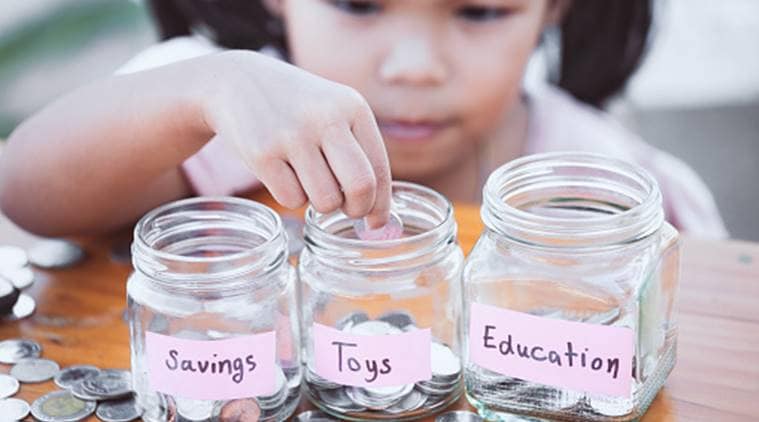
Piggy banks are cool. But you know what’s really cool when you’re a kid? Seeing your money and watching it grow. Having a clear jar incentivizes kids to save and it’s rewarding to watch it fill up.

“Save your pennies!” says McDonald. “Every penny counts and over a course of 6 months to a year that could mean a nice little deposit into your bank account.”

It also teaches opportunity cost. For example, “Buying this bigger toy today, means no smaller treats or items next week.” Remember to let your child make the money exchange at their time of purchase. There’s something very tangible about handing over money. It’s rewarding to get your purchase, but you can also see your jar is a bit lighter. Another fun idea is to label a few different jars. You could do any combination:

  • Spending
  • Saving
  • Sharing
  • Treats
  • School

Doing this will help them learn budgeting, bills and responsibility as they grow up. You can also enroll your child in American Bank & Trust’s Save Your Change program.

Forget about the word allowance

Allowance is kind of a bad word to begin with. It implies you’ll allow a certain amount of money to your children just for being in your house. Better to use the word earnings or earned.

If a reasonable amount of money is earned by standard household chores, cleaning room, etc, your child not only learns the value of work. They also learn that money is not automatic.

It’s a shift of thinking from a reward.  When it’s earned, it means it doesn’t even exist unless the task is done, sort of like a commission.

Teach compound interest

Compound interest is one of the greatest things about saving early. As your children get a little older, explain to them how interest rates work.

Knowing that money multiplies over time is highly motivating. American Bank & Trust can help too with a number of our online calculators. Use them to show examples to your children.

Posted in Discipline in kids, Financial freedom, Kids, money management

How to Teach Your Child to Save Money

Image titled Teach Your Child to Save Money Step 1

Consider beginning as early as two years old.

At the age of two, many children begin to enjoy doing small chores. Practicing these small chores will prepare your child for later on in life when you begin to give him an allowance for doing chores. Examples of chores you can practice with your two year old include:Having your child put away his toys.
Having your child ‘help’ you in the kitchen.

Begin to introduce your child to different forms of money when he is three and older.

 At this stage, your child may not fully understand money but you can slowly introduce to him the name of different coins and currencies. However, adult supervision is highly advised to avoid dangers like swallowing of coins.Hold up a coin, like a penny, nickel, dime, or quarter, and tell your child the name of the coin.

Explain to your child that you should only buy what is necessary.

When your child turns two, he will already know what he wants a lot of the time, even if he cannot vocalize it properly. For example, when you pass a toy store, your child may indicate that he wants a particular toy.Make it clear to your child that going inside the store does not always mean that you have to buy something; there are times when simply ‘window shopping’ is the better option.

Play board games that teach the concept of money management.

Like when your child was younger, games can still be an excellent way to understand
money management for children . Consider games that involve buying, selling, paying, and renting.Some board games that include these concepts are Monopoly and The Game of Life.Aside from board games, you could also help your child to set up a booth, such as a lemonade stand, to help him learn the value of hard work. Help him to prepare the items that he needs, like a table and a pitcher.

Create a savings goal chart with your child.

A savings goal chart is like a calendar that your child can use to plan out how much he has to save, and when he can buy the things that he wants. To make a savings goal chart:Ask your child what he wants; this could be a toy, or a trip to something fun, like a water park. Print out a picture of the thing your child wants and paste it on to the chart.
Search for the price of the toy and then divide it up to determine how many days your child will need to save his allowance in order to be able to buy what he wants.Mark each day that your child does chores with a sticker, to make it exciting as your child gets closer to earning his goal.

Posted in Discipline in kids, Kids, money management, Parenting, teaching teens

Simple Ways to Teach Your Children the Value of Money

teaching child value of money

Children aren’t born knowing how to manage money. Yet, teaching kids about money is often neglected. This can lead to poor choices in adulthood as well as costly habits and mistakes. As parents, we owe it to our children to talk freely about money and teach them how to become responsible when it comes to their finances. Then, we must follow up by providing real-world opportunities for to handle money on their own.

The Grocery Store is Your Friend

For a real-life budgeting and shopping, it’s hard to beat your local supermarket. Including your kiddos in the weekly grocery shopping is an excellent way to let them practice the skills you are teaching them. Share your grocery list and budget and then let them help you track down some of the items. Give them a set amount of money and challenge them to purchase as much food as they can with it. Or consider assigning older children a weeknight to be responsible for dinner. Require them to plan, budget, and shop for their meal and then actually prepare it and feed the family, it’s a great boost to their self-confidence.

Make a Plan For Your Kid’s Allowance

It’s hard to learn to manage money if you don’t have any. Children need access to money and opportunities to practice using it. Allowance is a great way to create those opportunities. Some parents link allowance to household chores; others expect their kids to help out with chores as a contributing member of the family and keep allowance separate. Regardless of which method you prefer, what matters is using allowance as a tool to teach your child the value of money and how to handle it responsibly. Here are our favorite tips for handling allowance for different ages:

Preschoolers and Early Elementary Students

Very young children can learn a lot from playing with Monopoly money and a toy cash register. Playing store and buying and selling items around the house is great fun for little ones. Once they reach school age, a regular allowance is appropriate. A good rule of thumb is one dollar per year of age per week. So, for example, an 8-year-old would receive $8 each week as compared to the 17-year-old’s $17 per week.

Late Elementary Students and Junior Highers

You may choose to provide your children with opportunities to earn over and above their regular allowance by taking on larger house projects like cleaning out the garage or washing all the windows. Plus, as they get older, money-earning opportunities outside the home will become a reality. Kids can babysit, pet-sit, mow lawns, and hold down part time jobs at stores or restaurants.

High Schoolers and College-Aged Kids

Finally, at an appropriate age, replace weekly allowance completely with your kid’s own earnings. Let your child have his own checking account to help him build skills and practice with actual financial tools. And remember, he is going to make mistakes, but that is an invaluable part of the process. Better to make $50 mistakes now than $50,000 mistakes later.
Spending. Saving. Giving.

Don’t make the mistake of indiscriminately throwing weekly allowance at your kids with no rules about what to do with it. Help your children use their allowance to establish a budget. A common rubric is to designate three categories for their allowance: spending, saving, and giving. A breakdown of 30% for spending, 30% for short-term savings, 30% for long-term savings, and 10% for giving works well for many people. Make sure to teach them wise decision-making practices in each category:

How to Spend

Teaching your kids how to spend wisely is one of the greatest benefits of giving an allowance. Kids shouldn’t be left unchecked to spend their money however they choose. Create expectations for spending and, as they get older, give them increasing responsibility for their own purchases.

Reasonable expenditures for kids include entertainment, birthday and Christmas gifts for loved ones, a set portion of their clothing, toys, cell phone bills and other electronics. Once your kids are of driving age, you may also consider having them pay for their gas or a portion of their insurance.

Use their spending endeavors as a vehicle for teaching about needs versus wants and help them make wise choices. For example, is there a critical difference between the $35 jeans and the $85 jeans? Encourage them to consider the values behind the decisions they make.

How to Save

Saving money must become a habit or it simply won’t happen. The earlier you begin, the better you will be at it. Talk with your kids about saving for short term wants, like a new cell phone for older kids or a Lego set or doll for younger kids. Help them set aside a specific amount of allowance each week to save so they can reward themselves with the exciting purchase.

Long-term savings is critical, but often neglected. Often times, long-term savings is used for large purchases like a first car or college tuition. You might open a special savings account earmarked for these long term goals.

How to Give

Lastly, nurture your child’s compassion and generosity by encouraging them to donate to their favorite charity. Help them choose an organization or cause that is near and dear to their cares and interests and make regular contributions to it. The more they believe in the organization they are supporting, the more motivated they will be to donate. Of course, money isn’t our only valuable resource—you can also encourage your kids to give their time and work to charities they love.

Teach Them to Delay Gratification

Teaching children the concept of delayed gratification is hard because everything is at our fingertips with the tap of a screen. Unfortunately, having instant access to whatever they want can set them up with poor or impulsive spending habits. Help your children develop self-control and the ability to delay gratification by requiring them to wait a set amount of time before making a purchase. Often, with a mandatory wait time imposed, your child may change their mind about making the purchase.


You can also nurture their capacity to delay gratification by implementing a wait policy for Keeping Up With the Jones. What we mean here is, when a new toy, gadget, or clothing item becomes all the rage among your child’s peers, don’t jump to make sure he’s the first to get the newest phone or the trendiest shoes. Give it a little time to play out. Let five or six friends or classmates be the cool kids first. The character development will eclipse any disappointment they may express along the way.

Don’t be scared to talk to your kids about your own finances.

Many parents shy away from talking openly with their children about finances. The topic has a history of being taboo in American households. In short, many of us were never given the tools to talk about money with our partners, much less with our children.

Or maybe we’re worried we are not modeling responsible financial management and don’t want our kids to know. But the truth is, parents are the biggest financial influence on their children. We are teaching them about money every day whether we realize it or not. They are watching us like hawks and picking up cues from our behaviors. To avoid wrong conclusions and misconceptions, it is far better to speak openly and honestly with your children about the household finances.


Within reason, allow your children to be privy to the family income and budget. Let them know what goals you are working toward and how you are preparing for retirement. Don’t shy away from sharing with them the financial mistakes and less-than-ideal financial decisions you have made over the years. Knowing your mistakes may be the very thing that helps them void a similar pitfall in the future.

Consider giving them some input on certain appropriate family financial choices and decisions. Integrate them into the process to foster an appreciation for how the family budget works. A plus side to this practice: When kids know how the family budget works, and what’s on it, they are less likely to pester their parents for extras.

Posted in Financial freedom, Kids, money management, teaching teens

Financial education for children

5 ways parents can teach kids about money management | Parenting News,The  Indian Express

April 4 is Children’s Day , and I’m reminded of the African proverb that declares “it takes a village to raise a child”. It’s true that we all have a role to play when it comes to raising the next generation, particularly when it comes to the vital issue of financial education for kids.

Financial education is a right. Some would say a basic human right. We need to make sure that every child in Hong Kong is getting what they need.

Currently there’s a lack of financial education in our schools. It’s true the situation is slowly changing for the better, but we need to overcome some pretty high obstacles including an already jam-packed school curriculum and a tendency to focus exclusively on exam-related subjects.

We need to start helping our children now!

An international survey (PISA) of 15 year-olds showed that two-thirds of them currently use a financial product. If you consider an Octopus card a financial product, the figure in Hong Kong would be even higher.

More kids than ever are expected to take control of their financial destiny. We really need kids to have a firm grasp of basic concepts like savings and debt management before they leave school.

Some theories suggest that early childhood is the best time to embed good habits and, as a rule, schools are a great learning environment.

Have input to what happens in your child’s classroom by talking to his or her teachers about how financial education can be incorporated into other subjects. Some schools now offer money management as an extra-curricular subject. If it’s not available at your child’s school, ask why not!

Let’s not forget that we all have a role to play in bringing up our children to be financially savvy. Teach your child some basic money management concepts this Children’s Day. It could be one of the most valuable lessons you ever share.

David Kneebone
General Manager, Investor Education Centre

Posted in Financial freedom, Kids, money management, Parenting

How to Use Allowances to Teach Kids About Money

For one thing, you don’t want to turn your children into little mercenaries who balk at washing the dishes unless they’re paid. Kids should help out around the house without expecting anything in return because they’re part of the family.

It’s also been my experience that parents have a tough time keeping track of whether their children have actually done their assigned jobs. As a result, the kids often end up getting their money even if they don’t do the chores. Or they end up getting nothing and miss out on learning how to manage their own money, which should be the purpose of an allowance. Either way, the system falls apart.

At the same time, it’s disappointing that 15% of kids get their money with nothing expected in return. In that case, the allowance becomes just another handout, and kids don’t learn the connection between work and pay.

So what’s a parent to do?

The practice of teaching kids about money seems to have caught on in a big way. In the 2015 Parents, Kids & Money survey from T. Rowe Price, 70% of parents reported giving an allowance to their children ages 8 to 14. That’s way up from 47% in 2013. Among kids who receive an allowance, 85% are required to earn it, versus 15% who get it with no strings attached.

  • Smart Ways to Talk About Money With Your Kids

I have mixed feelings about those results. I’m convinced that an allowance is one of the best hands-on teaching tools for children who aren’t yet earning money of their own, so I’m glad that allowances are becoming more popular. But one thing I’ve learned from speaking with hundreds of families over the years is that tying an allowance to chores isn’t necessarily the best way to go.Related Videos

A System That Works

My solution is a two-tier allowance system (see Don’t Tie Allowance to Chores and How to Handle Allowances). Kids get a base allowance that isn’t tied to basic household chores, such as doing the dishes and making their beds, which they’re expected to do without pay. But it does come with what I call financial chores—spending (and saving) responsibilities that the kids take over from you. So, for example, young children may be required to pay for their own collectibles or refreshments at the movies. As they get older, they can take responsibility for more expenses, such as after-school outings with friends, concert tickets and even clothing purchases (see How to Handle Back-to-School Shopping with Teens).

To make the connection between work and pay (and to earn extra money), children can take on extra jobs, such as taking out the trash or recycling, vacuuming the family room, raking leaves, washing the car, or whatever you define as service above and beyond.

This system has three pluses: It sets up a sensible, and workable, arrangement for tying allowance to chores. It’s easy to keep track of—you can pay for jobs on the spot, assuming the work meets with your approval. And it’s an effective way to make kids responsible for managing their money.

How Much to Give

Not only are more children getting an allowance, they also seem to be getting more money. Compared with 2013, fewer kids in the T. Rowe Price survey are getting $10 a week or less (50% versus 68%), and at the very top the number of kids getting $51 or more per week jumped from 2% to 9%.

Sign Up for Kiplinger’s Free E-Newsletters

Profit and prosper with the best of Kiplinger’s advice on investing, taxes, retirement, personal finance and much more – straight to your e-mail.

Subscribe to Kiplinger’s Personal Finance

Be a smarter, better informed investor.SAVE 66% OFF 12 ISSUES

For 8- to 14-year-olds, the $10 figure sounds reasonable. My guideline is to start with a weekly base allowance equal to half a child’s age, and then increase it as necessary depending on where you live, how old your child is and what he or she is expected to pay for.

So for an 8-year-old, $4 a week should be plenty. A 14-year-old could need more than $7 per week, especially if he’s paying for his own entertainment and school-related expenses. But for the life of me, I can’t figure out why any kid in this age group should get $51 per week

Posted in Financial freedom, money management, Parenting, teaching teens

Four simple ways to teach kids to save money

Every April, the ABA Education Foundation sponsors ‘Teach Children to Save Day’ to highlight the importance of Teaching Teens About Money management. Financial experts say that we set children up for success when we teach them financial literacy skills.

 A year-long study showed members of Junior Achievement Canada’s financial literacy program were three times more likely to save more, borrow less and spend less than they earned.

Financial literacy is a learned skill, but it doesn’t have to be complicated to be effective for children. Here are four simple financial literacy techniques to help your kids prepare for their financial future:

1) Show them that a budget can be simple .

Many people grow up feeling intimidated about budgeting, so they never learn. You can make budgeting straightforward for children by using the four-jar budgeting technique.

  • One for short-term savings goals (30 percent of income)
  • One for long-term savings goals (30 percent of income)
  • One for spending (30 percent of income)
  • One for donating (10 percent of income)

If you give your child allowance or chore money, be sure to provide it in small denominations, so it’s easy for them to divide between their jars.

2) Illustrate their savings goals.

Break out the art supplies with your child to create an image of their savings goal. Having a visual reminder of their savings goal will help your child stay focussed on the prize.

3) Help them learn the differences between needs and wants.

Use examples they can relate to; look around the house and discuss your family’s choices and the things that you could live without. This process will help them to make more informed spending decisions in the future.

4)  Set up a children’s savings account at a financial institution.

While the four-jar budgeting method is effective, it should work in conjunction with an actual savings account. Set a threshold for the amount in the long-term savings jar ($20, for example), and when your child reaches that threshold, make a big deal about depositing his/her savings in an account where that money will earn interest.

Posted in Discipline in kids, Kids, Parenting, teaching teens

10 Essential Financial Lessons For Teens

When talking to teenagers about money, you’ll quickly learn that many believe they are experts on the topic. As teens, they understand you go to work to earn money and that it takes money to pay bills and buy things. Most teens also know that saving money and donating to causes, and those less fortunate is essential.

If your teen has figured all of that out, they’ are on the right track to managing their money.

Us adults know, though, there’s still a lot more for them to learn. As children mature and start making their own money and spending decisions, the stakes get higher. That’s where we have to take our job as parents seriously. While your teen may think they know it all, becoming financially literate is a process.

Just like your child takes math, history, science, and language arts classes at school, there are essential concepts your teen needs to master about money.

Teens looking at a phone

Here are ten essential lessons that help you in teaching teens about money . The sooner they understand this information, the greater their chances of becoming financially healthy adults.

Ten Money Lessons for Teens

1.  Needs vs. Wants

Your teen may think they need the latest smartphone, video game, or even a car. And be prepared for a well thought out rationale if you question why they think it’s a need.

While your teen may have some good reasons to call something a need, make sure you are firm and give examples when discussing the difference between needs and wants.

  • A smartphone might be a need, but the latest smartphone is a want.
  • Without a new video game, they might miss playing with their friends online, but it’s still a want, not a need.
  • It might help everyone if your teen can drive to school or work, but in many cases, an extra car is wanted more than it’s needed.

We don’t want to send a message to our children that their wants don’t matter, though. If they budget for their needs and have an emergency fund in case something unexpected happens, they can set up savings accounts (also known as “sinking funds”) for their wants.

Practicing delayed gratification by resisting the urge to buy things on a whim will help prevent them from going into debt in the future.

2.  Spend Less Than You Earn, Save The Difference

Your teen understands negative numbers from math class, so it shouldn’t be hard to transfer that to money. When you consistently spend more than you make, you will end up with a negative account balance.

We need to teach our teens that if you spend every dollar coming in, you’ll never get ahead.

Saving money

When you spend less than you earn, you can pay your bills, avoid credit card debt, save for the things you want, and even invest for your future.

Your teen’s goal should be to grow the gap.

The bigger the difference between what they earn and what they spend, the faster their savings will grow.

3.  Track Expenses and Start a Budget 

Whether your teen has a job, gets an allowance, or has money from gifts in an account, they should track what they spend and set up a simple budget.

Most teens are surprised to see where their money goes when they start tracking all of their spending. If your teen has a smartphone, they can use a free app like Wally or EveryDollar rather than saving receipts.

Once they have a better sense of how much they spend and in what categories, your teen can create a simple budget with the same money management apps.

In the budget, your teen should consider setting aside money to save, spend, and give. This helps teens put cash in the bank while still allowing them to spend responsibly. By creating a giving fund, they can donate to important causes without worrying about running out of money.

4.  Save, But Start Investing Early

When your teen starts budgeting and works to grow the gap between earning and spending, they’ll have more money to save.

Consider introducing your teen to high-interest savings accounts for funding short-term financial goals. While the interest they earn on small account balances might not be significant, teach them how .01% and 2.0% annual percent yield (APY) savings accounts compare.

For example, you’ll earn $20 in interest if you have a balance of $1,000 in a 2.0% APY savings account for a year. The same $1,000 will only earn $.10 after a year in a .01% APY savings account. Teach your teen that you always want your money making more money!

Once teens have accumulated some savings, they should consider investing too. The longer their money is invested, the more wealth they will build over time – even if they deposit tiny amounts.

Introduce your teen to simple investing terms and help them open an investment account. At this point, you want them to use the “set it and forget it” investing strategy knowing that this is money for long-term goals in the very distant future.

5.  Use the Power of Compound Interest

Your teen now understands why they should use a high-interest savings account. After all, teens love money! Why should they settle for a local bank only giving a few pennies of interest when an online bank lets you earn dollars?

Now it’s time to show them the power of compound interest. When they invest money, and it starts making money, they’ll keep earning interest on top of interest. If they leave the money invested over several decades, they’ll see the “magic” or power of compounding – even if they never add more money to the initial investment.

Compounding interest

Time is the critical factor in building wealth through compounding. The earlier your child starts investing money, the more they’ll earn in the long run.

If they don’t believe you, show them a graph from investor.gov of a $10,000 investment at 4% interest compounded monthly over 30 years by using their compound interest calculator. Without adding any more money to the investment, the $10,000 grows to almost $34,000.

Your teen can try out this calculator for themselves to see how different initial investments, interest rates, compounding frequency, and years invested affect how much your money will grow over time.

6.  Understand Gross vs. Net Pay

When your teen gets a job, they’ll count the days until their first paycheck. But the excitement of getting paid can turn to disappointment real fast.

When your teen calculates what their paycheck should be, they’ll likely multiply the hours worked by their hourly rate. But kids don’t realize, or they forget there are withholdings and deductions taken from earnings.

If you want to prevent your teen from being shocked by their first paycheck, make sure they understand gross vs. net pay.

Money will be withheld for federal income tax, Social Security tax, Medicare tax, and any applicable state or local income taxes. There may also be deductions for any retirement plans your teen may be eligible for through their employer.

Your teen should know they may receive a refund after filing a tax return if too much money has been withheld from their paychecks during the year. But they should get used to planning their budget on their net pay instead of the higher gross pay they anticipated.

7.  Good vs. Bad Debt

Teens need to learn about different kinds of debt. While all liabilities need to be repaid as a part of every budget, one type of debt can move you forward while the other holds you back.

“Good debt” is money you borrow that helps you reach your goals. Student loans can be considered good debt if they help your child earn a degree leading to employment.

But the amount of good debt someone takes on can also be a real problem. The average student loan debt per person in 2019 is over $30,000.

Teens should consider all of their options before taking out massive student loans to fund their education. Is community college for two years an option? What about living at home or graduating from college in three years instead of four?

You want them to avoid “bad debt” at all costs. Bad debt usually carries high-interest rates and is often used to purchase our wants instead of needs. Swiping a credit card too often can put teens in a cycle of debt that’s hard to recover from.

8.  Your Credit Score Matters

As young adults age, they may be able to open up credit cards. Even with small lines of credit, your teen can make mistakes such as making late payments, keeping high balances on their account, or only making minimum payments.

This can prevent them from paying off their debt and negatively impact their credit score. A cycle of financial problems results when credit card debt grows.

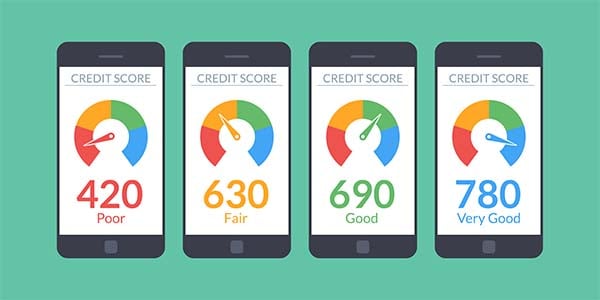
Range of credit scores

Teens need to understand that building a high credit score can save them money on costs, including car insurance or cell phone contracts. When your teen is ready to leave the nest for their own apartment, having a high credit score can increase their chances of approval on rental and loan agreements and may save them money on utilities.

Teach your teen that their credit score can be damaged quickly by irresponsibility. Also, consider talking to your kids about reviewing their credit report each year to make sure no one has opened an account in their name.

Tell your teen to watch out for sites that want you to pay money to get your credit report. Everyone has access to a free copy of their credit report from each of the three credit bureau’s once a year from annualcreditreport.com

9.  Big Loans Can Really Affect Your Life

Teens can be faced with adult-level decisions when it comes to taking out large sums of money for things like cars and college. Before they earn a steady paycheck, they can be thousands (or tens of thousands) of dollars in debt without understanding how long or difficult it will be to pay the money back.

A car might only cost $10K to them – or a few hundred dollars a month. But young adults forget that’s only one expense they’ll have as they become more independent.

When teens consider college loans, they’re thinking about their first “real” job and how big their paychecks will be. They may not realize they could be paying back loans for decades – even if they have good jobs.

Teens considering big loans need to use student loan calculators and look at loan amounts, terms, and interest rates to better understand the debt they want to take on.

If they’ve already tracked expenses and started using a budget, have them project all of the expenses they could have as a young adult and compare it to their net pay from a career that interests them. When you add in a student loan payment, the idea of taking out a big loan may not seem like such a smart decision.

10.  You Can Be an Entrepreneur Without Taking on Much Debt

Some teens are natural entrepreneurs and have terrific ideas for starting small businesses. But they may spend time online trying to figure out how to grow their business – including spending too much money to get their business started.

You don’t want to dampen your child’s enthusiasm by only talking about money. But you also don’t want your teen (or yourself) to take on too much debt before you know that they’ll stick with the business. And that it will be profitable.

Help your teen figure out ways to market their business, get the equipment they need and find customers for as little money as possible. This will also help them make money faster because they won’t have a debt to pay off.

If their business takes off, they can put their profits back into their company to help it grow. Or they can find other low-cost options to help scale their business.

Posted in Discipline in kids, Financial freedom, Kids, money management, Parenting, teaching teens

Pocket money for a two-year old? How to teach children about money

“A weekly allowance is great way to help kids to manage their money. There is no better way to help children learn to manage their money than to make their own mistakes.”

If your children, like so many, enjoyed a Christmas of munificence, the sight of an overflowing recycling bin and ever-too-swiftly discarded presents may have left you with a slight sense of the Grinch. But if cutting down on the amount of presents your children receive from friends, family and Santa is out of the question, how about opting for an alternative tack: taking the time to instil in teaching kids about money.

Yes, they may still end up getting too much in your eyes, but they may also have a greater appreciation for how much things actually cost. And you never know: convincing your offspring of the benefits of financial prudence might just help you keep your own finances in check this year.

It is hard to dispute the fact that childrens’ expectations today have risen sharply when it comes to Christmas and birthdays – and even in day-to-day life, when eating in a restaurant or getting a takeaway is not an unusual occurrence.

If you’re a parent, you’re probably already familiar with a child coming home from school bemoaning the girl or boy who received 20 presents from Santa or €1,000 for their communion.

“My sense is that children seem to get much more compared to previous generations; it’s probably a function of prosperity and the consumer society we live in,” says financial adviser Simon Shirley. A parent himself, Shirley’s seven-year already has his eyes on his Christmas 2017 wish list.

This environment of relative bounty means that it has never been more important to educate children about just where all those presents come from or risk having them reach adulthood unable to adjust when the parent turns off the financial tap.

For Marah Curtin, head of client engagement at Davy Stockbrokers, it’s never too young to start teaching your children about money. “The value of money, how to earn it, and save it, and maybe even share some with those less fortunate, are all good lessons to learn as early as possible in life,” she says.

Curtin runs Davy’s Cents for Kids programme, aimed at teaching young children about money. She says that even very young children do grasp the basic concepts of money and budgeting.

And the earlier you can start, the better.

“We’re not raising children, we’re raising responsible adults,” she says. “One of the biggest mistakes is to wait until they’re in their teens to start talking about money.”

Pocket money at two

Whether to give weekly pocket money, how much, at what age, and whether it should be linked with household tasks is something most parents will grapple with at some point. Not Curtin, however. When her eldest child was just two years old, she started giving him an allowance.

“A weekly allowance is great way to help kids to manage their money,” she says. “There is no better way to help children learn to manage their money than to make their own mistakes.”

She suggests that children should get €1 per year of age. So, for example, a five-year old would get €5 a week and a 10-year old €10. “As the child gets older, the money increases, but so do the responsibilities associated with receiving that money.”

And don’t be tempted to put your hand in your own pocket when the inevitable happens and the child spends their money too quickly. If they waste all their money on Pokémon cards on a Friday and have nothing left for a treat on a Saturday when their siblings are eyeing up an ice-cream, let them suffer.

“Don’t bail them out!” advises Curtin. “Too often parents don’t express that there are limits.”

Sometimes, we as parents take the easy road; when you’re busy, stressed, under pressure, isn’t it easy (if you have the means) just to buy whatever your child needs rather than make them to wait to save for it, and possibly endure the associated whingeing that comes with it?https://tpc.googlesyndication.com/safeframe/1-0-37/html/container.html

Maybe, but it’s not always the best option.

This Christmas, Curtin’s 12-year-old learned a life lesson when he found a gift under his tree that he may not have dreamed of – his school uniform. Earlier this year, he lost his school tracksuit and, rather than putting her hand in her pocket to buy him a new one, Curtin put it on his Santa list. So, while he may have gotten all the traditional trappings of a 12-year old as presents this year, he also had to sacrifice one of his gifts.

“It’s a big lesson for him,” she says.

Pleasure of saving

For many kids, the joy of getting money is in spending it. But others will take as much pleasure in saving it. The key is instilling the benefits of delayed gratification and encourage those who are loathe to save to do so.

A nine-year old getting pocket money of €9 a week, for example, won’t immediately have enough for a new Barcelona or Leinster jersey. But if they are taught how to save, and manage to do so, the benefits are twofold.

“It’s quite satisfying for a child to get something they want to buy with their own money; it’s an incredibly important goal,” says Curtin, “It’s empowering”.

Ron Leiber, a New York Times personal finance writer and author of The Opposite of Spoiled, suggests that parents give their children three money banks, rather than the traditional one, with each one labelled “give”, “save” and “spend”.

To make it even easier for kids to understand the impact their saving has, use transparent jam jars so children can see their money grow. It also introduces the concept of giving something away to charity.

So, if a child gets €9 for example, you could encourage them to put 20 per cent (€1.80) in the “save” jar, 10 per cent perhaps in the “give” jar (which can be donated to a charity of their choice at the end of the year) and the rest in the jar for spending.

When it comes to teaching children about money, many parents may be looking to recreate the days when they got their Henri Hippos and little blue savings book from the bank. But for younger children especially, understanding the link between a bank account and their money may be a step too far.

“It doesn’t always make sense to open an account,” says Curtin, pointing to the charges and minimal interest. “It can actually cost to have money in the bank.”

Instead, keep it simple by adopting the money bank solution outlined above. “I really think the power in teaching children about money is keeping it tangible,” she says.

SSIA for the home

So, instead of earning maybe €1 in interest every year, an easier and more concrete way of encouraging your children to save is by running your own family-style SSIA scheme. This could see you offer an extra €1 for every €10 saved, or you could add a €5 to every €20 saved, or some such approach.

Anther option is to encourage children to convert their money into “Cyril Squirrel” savings stamps at the post office. You can buy a stamp for just €1, and younger children will enjoy sticking them into a savings card and watching them grow.

The downside of these stamps is that, to cash them in, you have to lodge them to an existing Post Office deposit account, which you may not want or need. And savings stamps may not be as tangible a sign for a child, in the way a tower of €1 coins in a jam jar is.

For older children, a bank account can be a useful way to introduce them to the formality of finance, or even a safer place for their funds once they start raking it in after their communion.

“I remember vividly I got £29 for my communion and opened an ICS building society bank account with it,” recalls Shirley. “It’s a good way to gain an understanding of money and get into the savings habit”.

When the time comes to buy new football boots, a new swimsuit or school bag for the child, rather than go off and do it yourself, get the child involved in shopping around for the best price. Thanks to online shopping, it doesn’t necessarily mean a tortuous expedition to your local shopping centre.

“Take advantage of teachable moments,” says Curtin, who adds that the weekly shop is another good place to get children involved in looking for the best value.

For tech-savvy older kids, there are plenty of apps available that they might enjoy using and which will help them track what they’re spending their money on.

Financially sheltered

It may be tempting to keep children sheltered from the harsh realities of your family’s finances, where you may not have enough money for everything and struggle to stay afloat. After all, why burden them with this knowledge when still so young?

However, a little knowledge, delivered in a child- or teen-friendly way, can offer an important early exposure to adult life.

“In my teenage years, I understood how much my father was earning. The sooner they [children] are exposed to this, the sooner they grasp it,” says Curtin, noting that some people may feel ashamed to tell their child that they don’t have the money for something.

“We don’t want to worry children, but it is okay to say ‘we don’t have money for this because we’re saving for this right now’. The more we talk about decisions, the more our children become aware.”

Shirley suggests taking it a step further and equating something the child wants with the amount of work needed to generate it. So, for example, if a Lego set costs €100, then this could mean 11 hours work in a shop.

“Childhood should be carefree,” he says. “But a child should have some sense of what the family can afford and not afford.”

Posted in Discipline in kids, Financial freedom, money management, Parenting, teaching teens

The Most Important Life Lesson to Teach Your Children

Across the country, or even statewide, we don’t currently have a formal process for teaching our kids about their finances, but we should absolutely be teaching our kids about their finances. There are lots of different ways it can be done, but the important part is that kids grow up with an understanding of spending only what you have, contributing to savings and that one day, they will have bills to pay. When we instill ideas in our kids from an early age, we help ensure they are prepared when that first credit card offer comes in the mail, and when they go out on their own and have to pay rent and utilities. How you go about teaching your kids is up to you. 

Lots of people don’t want to share their personal financial situation with their children, and I personally think that’s totally fine. There are lots of ways you can focus on teaching money management for children without sharing your own details. Here are a few examples that I have encountered among my friends and family.

1. Decide on a Savings Plan

Pick a percentage you think is reasonable, and let your kids know that a percentage of any birthday checks they receive or babysitting money they earn will go into savings and explain to them that this is a habit they want to have for the rest of their lives. People I know who have done this chose a percentage higher than what you would probably save in the real world, in an effort to set their kids up to have a good amount in savings by the time they enter the real world. The exact amount you choose is up to you, but I like this idea because it gets kids thinking about saving and starts the habit of not spending everything you earn early on.

Other friends of mine have let their kids spend any cash they receive, but any checks go into savings. For birthdays and things, often checks will be larger than cash amounts given, so this can be a good plan for building your child’s savings account, but is less translatable to the real world. If you choose this plan, I would use it in conjunction with other methods of teaching your kids about personal finance.

2. Mandate a Savings Account Minimum Balance

As your kids get older, the toys and things they want seem to increase in price. For those items they really want and are willing to spend their own money on, come up with a savings plan for them. Allow them to spend what they want as long as their savings account has a certain amount in it. Or make the savings account they normally contribute to like the adult version of a retirement account, and explain that they can’t just empty it when they want a new toy. Instead, they’ve got to save up by not spending their future income and put that money away separately towards a certain goal.

3. Turn their allowance into a real world income

This is the most complicated one, but perhaps the one that would teach them the most about how the world of personal finance really works. Each week they receive an allowance for chores completed, which effectively equates to their paycheck. Once a month, they have to pay some of that back to you for various expenses, which would represent, rent, utilities, groceries, etc… If you choose to go this route, you will want to make sure their allowance is enough that they can pay you a portion back and still have some left for spending, and of course the amount they would pay you back would simply be so they get the idea, not necessarily a real world portion.

How you choose to teach your kids about personal finance depends on how much effort you can and want to put into it, but the important part is that it is something that is talked about. Whatever method you use, take the opportunity to explain to your kids how things will work when they go out on their own and help them set up good habits now that will serve them well later on. Hopefully these ideas have gotten your creative juices flowing.